| Chapter One Copyright 2006 Dedicated to the citizens of New Orleans who lost homes, lives, friends and so much more … remember, the sun will rise again. The Beginning In the image of God, we were made Exposed to the sun, with little shade The hues of our skin: black and brown as a result The content of our character, strong enough to exalt The land we roamed was rich and pure Clean water, fresh food, clear skies – so secure We were born, we were loved, we were strong, we were true We birthed traditions, formed societies, created cultures – we were new The lyrical tones that flowed from the tips of our lips Became languages with profound phrases that grew into songs to move our hips Colors of the plains, colors of the mountains, colors of the sky, colors of sea We used them all to weave fabric that draped our bodies gracefully We were made in the image of God To soar, to shine, to enjoy His fruits We were chained in the image of Man To fulfill the lusts of flesh-driven pursuits The Arrival They came in chains: some dressed in rags, some not dressed at all. Their tasks were monumental, yet no one bothered to give them their job descriptions. With one glance at the vast landscape that lay before them, it was easy to see that this land was unyielding, wild and rebellious. With pockets of swamps, lakes and unlivable territory, it was hard for any man, even one with the wildest of imaginations, to picture a future where this swampy, hot and diseased land would transform into a flourishing French province. It was hard for the explorers to imagine it and even harder for the foreign laborers shackled by hands and feet to understand. All men, both slave and free, who dared to conquer this often flooded and undeveloped territory held the fear of disappointment and failure secretly within their hearts. Neither overseer nor slave would dare to express the horror in knowing that the task at hand could prove to be insurmountable. Yet the free man had the advantage. With resources in abundance from plantation companies and slaves imported from as close as the West Indies and as far as the shores of Africa, the free man could dream longer and more intense than those belabored with accomplishing the goals of 18th century developers. And, like many of their ambitious Navy counterparts, men like Jean Baptiste LeMoyne Sieur de Bienville dreamed so long and so intense that he became successor to his brother, Pierre LeMoyne Sieur de Iberville as one of the greatest midshipman in the Royal Navy. Iberville and Bienville were masterful seaman who had conquered and established several territories including Mobile, Dauphin Island and Biloxi. Bienville established New Orleans in 1718 with the hopes that the City would be a prosperous port town for shipman en route to other lands via the Gulf of Mexico. His intuition proved to reap great rewards, but not without sacrifice and economic hardship. With his founding of New Orleans, Bienville was granted the west bank portion of the City separated by the Mississippi River and the property would later become known as Algiers. What's in a Name How Algiers got its name remains a mystery. Some historians recall accounts documented by explorers who compared the quaint territory to the capital of the African nation Algeria due to its large population of slaves, hence the name: Algiers. Whatever the origin of the name, slaves occupied and worked on the land for companies like the King’s Plantation, the Company of the West and the Company of the Indies. Skillful slave laborers were sold in Algiers and they proved to be masters in agriculture. Many slaves produced crops such as rice, corn and indigo. The commodities were said to be in so much abundance that the surplus was often exported to other territories including Pensacola, Florida. The Black Code Like many colonies in the early years of the United States, slave populations were growing and in some parts of the country, slaves outnumbered those of European settlers. To be overpopulated with slaves produced fear among French rulers whose plans included assisting settlers with becoming citizens of a new land. To help dissipate those fears, in 1724, Bienville developed “Code Noir,” which is translated as the Black Code, to reassure settlers or “subjects,” as they were sometimes called, that the French were in control. The prelude to the code’s 28 articles informed those who lived in remote areas with large slave populations, that should they encounter conflicts with their human property, swift and sometimes deadly consequences awaited the poor servants. The articles contained in the “Black Code” outlined specific laws for governing slaves, which included extreme punishments, lifetime slavery, religious requirements and restricted social interactions. By decree of the Code, all slaves were required to be instructed and baptized as Catholics. Slaves could not own anything and all of his or her possessions belonged to the master. Moreover, hired overseers were required to be Catholic and should such a person be found as a non- Catholic, their slaves could be taken away and the overseer would be severely punished. Slaves were allowed to marry, but at the permission of the master. If a woman was a slave and her husband was free, then she and all of her children would be slaves belonging to her master. If a woman was free and her husband was a slave, then she and her children would be free. Slaves were forbidden to marry whites nor could they maintain concubine-like relationships with whites or free persons of color. Slaves belonging to different masters were forbidden to congregate and socialize with one another. Slave uprisings occurred more frequently than most slave owners admitted and in direct opposition to reality, many slave owners refused to paint a picture of a slave being anything other than a willing participant in human degradation. The truth that many feared would be made known is that slaves were planning uprisings daily and many slaves often escaped from their masters on a regular basis. Congregating slaves of different masters could expect to be whipped and or killed for the simple crime of communing with one another. Masters were required to feed, clothe and care for their slaves in the most humanely way possible afforded a slave during that time. Punishment to a master was of course far more lenient and included paying fines or having slaves taken away. No whipping or corporal punishment was outlined in the Code in regards to masters and their treatment of their slaves. The Code sent out a clear message to all men, women and children involved in the development of this wild, unyielding land with great potential. The message was that all rights and privileges belonged to the free man and none to the slave assigned the task of turning the dreams of ambitious settlers into a reality. The Battles As France, Spain and Britain continued in their struggles for dominance of the new land that would become the United States, Algiers inevitably became a part of that struggle and was soon overcome by Spain’s dominance. In 1769, Spain ruled the colony and mandated that all property belonging to the Crown be sold. As a result, Louis Bonrepo became the proprietor of Algiers in 1770 by decree of the Spanish Government. Algiers and its undeveloped cousins that included tracts of land now known as McDonoghville, Gretna and Lower Algiers was bought and sold several times between 1770 and 1805. Barthelemy Duverje bought the property on August 9, 1805 for $18,000 and sold parts of it to other wealthy developers. Duverje built his family home in 1812 at the site that is now the Algiers Courthouse. Duverje’s efforts were clearly a spark for economic growth that resulted in further development and the subdividing of the property. From 1814 to 1815 Algiers was involved in a series of battles known as the Battle of New Orleans. Citizens of all social classes and ethnic backgrounds combined their resources and talents to present a united effort in the war. Louisiana was the only state in the Union to commission African slaves, Indians (mainly Choctaws) and free men of color to serve in the war as military personnel. Men of European, Native American and African descent fought together, protected homes and labored to widen canals to build defenses along them. The effort was indeed valiant and deserving of recognition for its cross cultural unification. However, it existed only under the auspices of war. The victory at the Battle of New Orleans proved to be monumental, not only for its multicultural troops, but also because in Louisiana’s history, it ushered the state into its political incorporation in the Union. The Pioneers After the war, in 1815, several property owners were listed in Algiers with names that include, but are not limited to, Mossy, Bienvenu, Dupuy, De la Croix, Dessales and the infamous McDonogh. John McDonogh was a resident of the French Quarter before moving to Algiers in 1817. McDonogh’s property was large enough to have the parcel bear his name as the town of McDonoghville. His reputation in the community was that of a wealthy miser who denied himself luxuries that he could easily afford in order to save money. He later revealed that his mission in life was to accumulate wealth for the benefit of the poor and enslaved. In addition to his philanthropy, McDonogh was known to treat his slaves with reverence and respect. He empowered many of them in tasks normally assigned to overseers and he took pride in his decision to place, “no white man over them, as an overseer.” McDonogh described his relationships with his slaves as endearing and compared his interactions with them to that of close friends and confidants. Slaves who were owned by John McDonogh were afforded opportunities to work as managers and supervisors of other slaves. McDonogh reported in his memoirs that he did not have the time to manage all the work tasks assigned to the slaves, therefore, he would meet nightly with the slave deemed as the manager or “commander” to receive a report of all daily activities. McDonogh called his slaves businessmen who, “enjoyed my confidence, collected my rents, leased my houses, took care of my property and effects of every kind, and that with an honesty and fidelity which was proof against every temptation.” It is said that McDonogh did not sell his slaves, but rather assisted many of them in obtaining their freedom. Once free, he helped them to return to the African nation of Liberia. Slaves who labored for McDonogh for fourteen and one half years would be freed with money, clothes and other provisions needed for independent living. The New Orleans Commercial Bulletin featured a complimentary editorial report on the intentions of McDonogh’s liberated slaves as they sailed to Liberia. The article described the newly freed men and women as “educated and intelligent subjects.” The writer pointed out that the majority of the slaves liberated by McDonogh had built houses, participated in business transactions, rented homes and collected rents. Readers were encouraged to imagine, “what sort of a colony these people will constitute in their own original country.” The free people were said to be highly skilled and qualified to establish a great future for themselves in a land where they would no longer be bound by “The Black Code,” but be free to live as men and women worthy of the dignity and respect afforded the Eurpean settlers. The last of McDonogh’s slaves received their freedom in 1859 almost nine years after his death. With detailed provisions outlined in his will, McDonogh had impressively planned for his wealth to live on well beyond his lifetime. He was a well-versed advocate for social change who had more than enough money to fund his vision. McDonogh believed that all children should receive a free education. In his will, he reported that the revenue generated from his abundance of property could finance the education of all the poor in two states: Louisiana and Maryland. McDonogh owned property on both sides of the Mississippi River in New Orleans with the town of McDonogh being listed as his suburban property. In 1861, ten years after McDonogh’s death, schools were being built to educate the City’s poor. Close to 40 schools were built between 1861 and 1951 with funds from the McDonogh Fund, an effort that McDonogh lived and worked to be accomplished after his death. Growing Up Another pioneering property owner who purchased property from Duverje was Andre Seguin who bought land in 1819 to establish Algiers’ first dry dock. Seguin’s ingenuity led to Algiers’ transformation from a community solely dependent upon its plantations to a community with a growing industrial empire. In 1837, the first dry dock was constructed in Kentucky and transported to Algiers. The New Orleans Floating Dry Dock Company owned and managed the enterprise which was valued at $200,000. The beginning of the dry dock industry ushered in a stream of docks owned, operated and managed by men like Francois Vallette and O.I. McLellan whose names still remain a part of the Algiers community (Vallette Street and McLellanville also “McCliney-ville and/or McClendon-ville”). In the 1800s, there were more than 15 docks in the Algiers community that provided gainful and steady employment for its residents and revenue for maritime business owners. With the growth of the maritime industry was also the expansion of transportation. In 1827, the Algiers Ferry was established and began transporting passengers between Algiers, or the “right bank of the river” to “New Orleans Proper.” In addition to the maritime industry that began to flourish in Algiers, was the railroad industry that developed into an enterprise that would employ thousands of Algiers residents in its years of development. The Railroad was established in the early 1850s and in 1853, commissioners of Algiers approved the construction of a railroad extending from Louisiana to Texas. Those commissioners included noted men whose names appear on many streets in Algiers including J. Thayer and R.B. Sumner. Thayer, Sumner and six other prominent commissioners were instrumental in establishing the New Orleans, Opelousas and Great Western Railroad. December 3, 1853, marked the first excursion of the railroad which took passengers from Algiers to a point known at the time as St. Charles. In the years following the establishment of the railroad, rail lines were expanded and more stops were added. As the railroad expanded, so did the railroad yards that serviced and maintained the trains. The yards spanned from Algiers to Gretna and other parts of Jefferson Parish. Citizens who possessed skills often provided services in foundries, lumber yards, offices, carpentry shops, black-smith operations and paint shops. In addition, the massive infrastructure required to operate the railroad, caused Algiers to be divided in half which resulted in “Upper Algiers” or “Old Algiers” and the “Lower Coast Algiers.” Viaducts, or small bridges, were built over the yards to allow horse-drawn traffic and pedestrians to cross the yards without interruption. Later, the viaducts were expanded to allow streetcars, vehicles and buses to travel the spans. The viaducts were located at Newton, Patterson and Eliza Streets. To be continued ... |
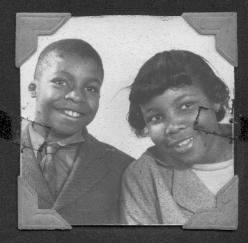
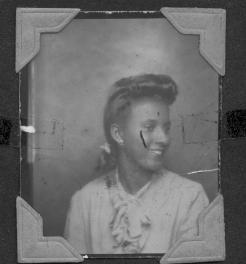
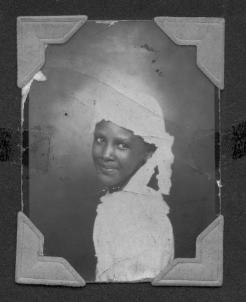
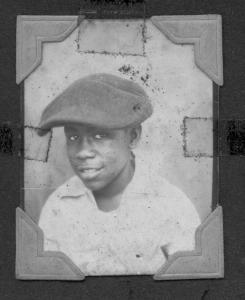
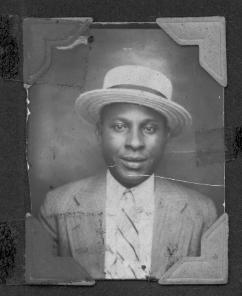
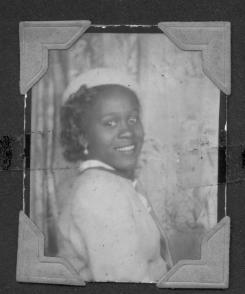
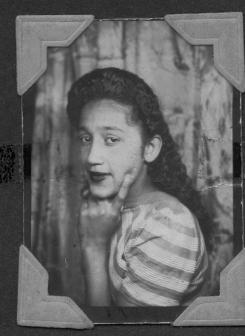
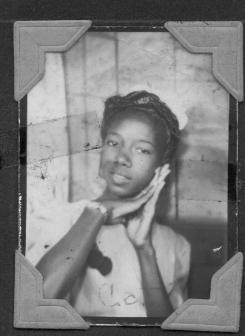
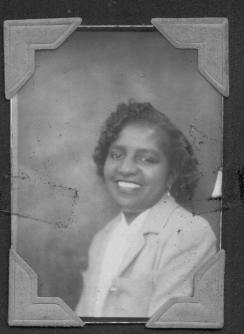
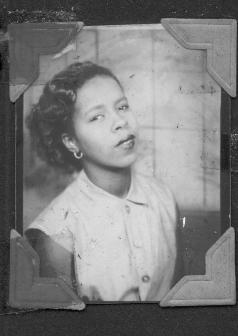
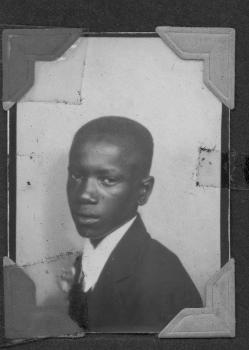
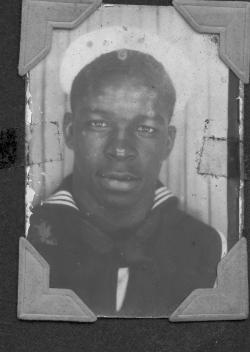
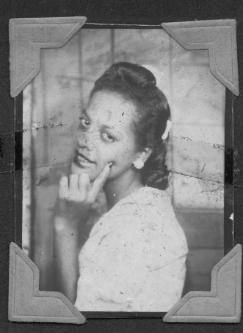
Minerva Simmons
circa 1940
circa 1940
Frances Spencer
circa 1940
circa 1940
Shirley Scovell
circa 1940
circa 1940
Identity Unknown
circa 1940
circa 1940
Identity Unknown
circa 1940
circa 1940
Identity Unknown
circa 1940
circa 1940
Identity Unknown
circa 1940
circa 1940
Identity Unknown
circa 1940
circa 1940
Identity Unknown
circa 1940
circa 1940
Identity Unknown
circa 1940
circa 1940
Identity Unknown
circa 1940
circa 1940
Identity Unknown
circa 1940
circa 1940
Identity Unknown
circa 1940
circa 1940
Algiers: The Untold Story
A New Orleans Neighborhood
A New Orleans Neighborhood
 | |  | |  | |  | |  |